
JYTK APPAREL
Kidswear Manufacturing FAQ
Practical answers for preparing an OEM, ODM or private label project.
Before quotation and development
Which cooperation model fits an existing technical pack?
OEM is the starting point when you have a technical pack, artwork or sample. Share the complete brief so the scope can be reviewed.
What if we only have references?
ODM development can start from a base style or a product direction. Standard and deep original development have different scope, fees and timing.
What is the standard MOQ?
300 pieces per style. Colour and size splits depend on the material and workmanship minimums.
How long does a sample take?
The ordinary reference is 7–10 working days after complete information and applicable sample payment. Complex projects are assessed separately.
How is bulk timing calculated?
The standard reference is approximately 30–45 calendar days after Bulk Production Release. Destination transit is separate.
What are the standard payment terms?
30% T/T deposit and 70% before shipment, with quotations in USD on an FOB Qingdao basis unless otherwise agreed.
Can we use our own labels and packaging?
Yes. Confirm labels, tags, barcodes and packaging in the specification. Special materials and packaging may carry their own costs and minimums.
How are designs and samples handled?
Customer-exclusive materials follow the project agreement. General base styles and manufacturing know-how are treated separately.
Quality, testing and delivery
Who is responsible for testing and labelling requirements?
The destination market's test standards, labelling requirements, label language, chemical and material requirements, retailer compliance manuals and your own standards are provided by you. We assess feasibility, flag anything that affects cost, minimum order or lead time, produce to the confirmed standard, support the agreed testing and raise an obvious risk when we see one.
Who pays for third-party testing or inspection?
Project-specific third-party testing, inspection and certification are normally borne by the customer and quoted separately. Where a first test fails because of our material, production or workmanship, the reasonable cost of the re-test is ours.
What happens if the inspection does not pass?
The goods are corrected and inspected again rather than shipped on a promise to resolve it later. A specific deviation is released only where you have accepted it in writing after being told what it is.
How do you handle a reorder?
A repeat of an unchanged style can take a shorter route, because the version is already approved. Even then the quantity, colour and size split, current price, material availability, capacity and delivery are confirmed again. A change to fabric, colour, pattern, workmanship, logo, packaging or testing returns the style to review and re-sampling.
What are the standard trade terms?
Quotations are in USD on an FOB Qingdao basis, with a 30% T/T deposit and the 70% balance before shipment. CIF and DAP can be evaluated. DDP is not offered as a standard term: duty, customs responsibility, the importer of record and the final cost are assessed first.
Quotation and risk
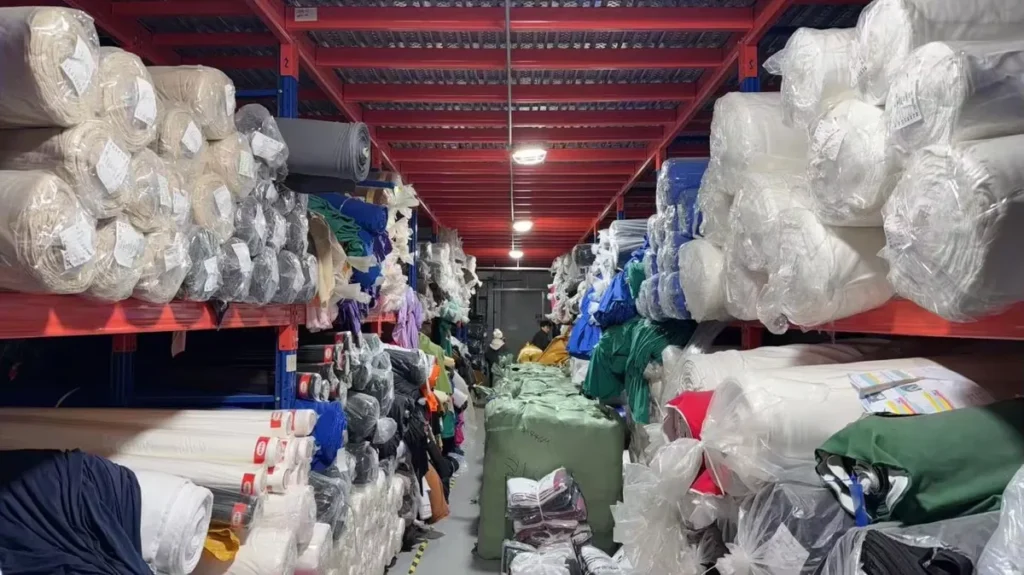
How is a price reached, and how long does it hold?
While the brief is incomplete you receive an estimate with its assumptions stated, which supports planning but does not lock a price. Once the specification is clear, a formal quotation is prepared and reviewed before it is issued; it is valid for 30 days unless it states otherwise.
What would cause a price to be revisited?
A material change in quantity, colour split, fabric, weight, workmanship, packing, size range, testing requirement, delivery timing or trade term. Raw material or exchange-rate movement can also trigger a revalidation before the 30 days are up.
Can we nominate our own fabric supplier?
Yes. Purchasing is coordinated and incoming material is checked, and any risk that is visible is raised in advance. A delay, defect or minimum-order problem in a nominated material is not automatically borne by the manufacturer, while a risk we saw and did not raise is.
Can we supply our own material?
Yes, by prior agreement. Normal loss, replenishment responsibility, storage, sorting, inspection, handling and what happens to leftover material are agreed before the material arrives.
Do you offer credit terms?
The standard terms are a 30% deposit with the balance before shipment. Documents against acceptance, open account and payment after shipment are considered per customer and require approval; a long relationship does not by itself create credit terms.
Materials and fabrics
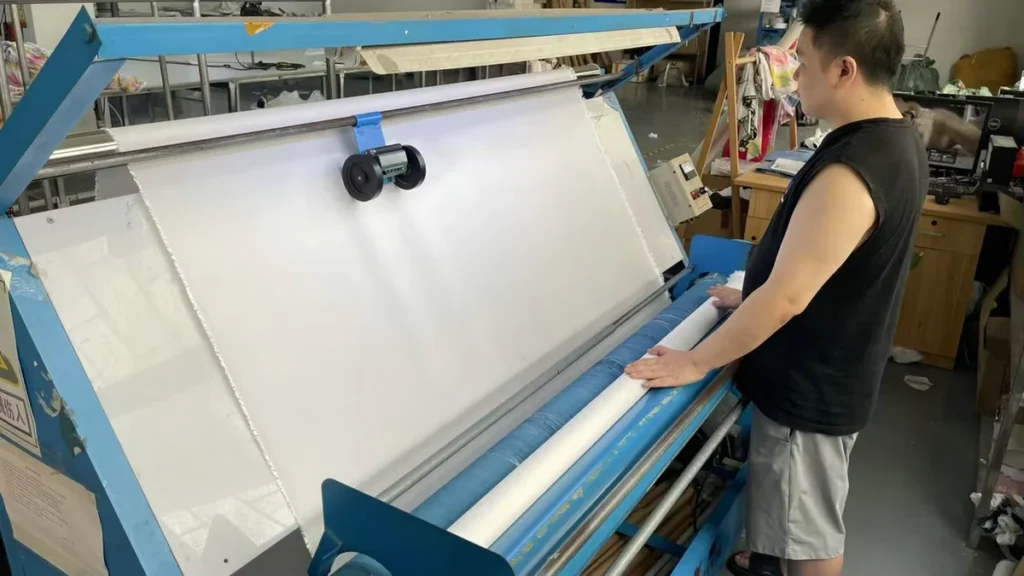
Can you source the fabric for us?
Yes. The requirement is matched against available materials, quoted with the garment, and confirmed against a physical sample before the material is committed. Where you nominate a supplier, purchasing is coordinated and incoming material is checked.
How are colours approved?
Against a physical standard rather than a screen. Composition, weight, hand feel and colour are confirmed together, because a colour approved on a monitor is not a colour anyone can match in bulk.
Do you offer organic or recycled materials?
Take it as a project requirement: the specific material proposed is confirmed, along with any testing the destination requires. A material category name is not treated as proof of a property, and no performance or certification claim is made without a test basis.
Design, samples and ownership
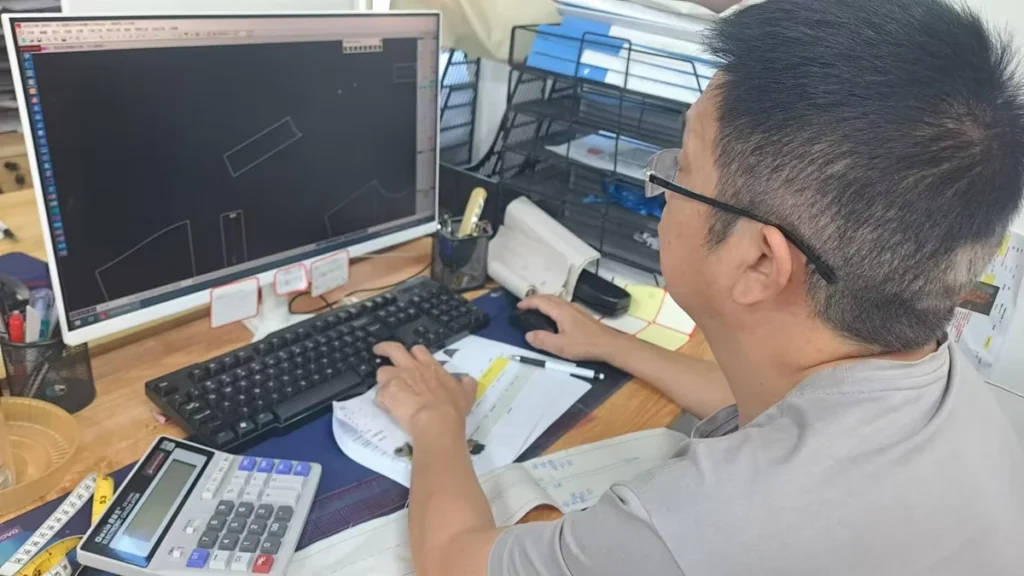
Who owns the design and the pattern?
Your logo, trademark, original design, technical pack and artwork remain yours, along with patterns and designs developed specifically for your project. Existing base patterns, process methods, production know-how and supply relationships stay with the manufacturer.
Will our design be shown to another customer?
No. Customer-exclusive material is not passed on, resold or reused for another customer. Keeping it confidential is not the same as granting market exclusivity, which is agreed separately in writing.
Can you copy a sample we own?
Your own previous styles, your own patterns and technical packs, and samples you legitimately own are accepted. A one-to-one copy of a protected brand design, counterfeit marks, false labels or artwork that clearly infringes are not.
Do we get the pattern files?
Patterns and designs developed specifically for your project are yours. What is shared and in what format is agreed with the project rather than assumed at the end of it.
Can we visit the factory?
A factory visit or a video walkthrough can be arranged through the commercial contact, so the manufacturing team you are relying on is something you can see rather than infer.